Skip to content
CrowLingo

Compare recordings · follow the evidence

What does a crow rattle mean?

A rattle describes a sound pattern, not a known sentence. American crows make caws, rattles, coos, and other sounds. These recordings help you compare them; they do not establish that a call means “hello,” “food,” or “danger.”

Cornell Lab: American crow sounds · Researcher Q&A on what remains unknown

How to read a sound picture

A spectrogram is like a timeline with pitch stacked vertically. Read left to right for time; look higher for higher frequencies. Separate marks can help you notice pauses. Lines and dense patches help you compare texture. Background noise appears too.

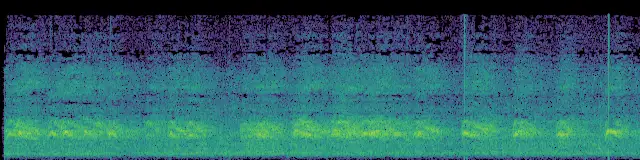
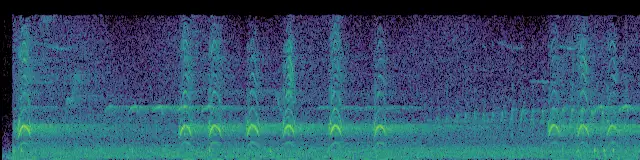
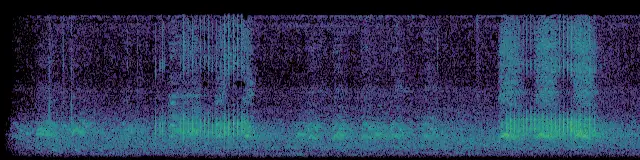
All three pictures use the same eight-second window, 0–8 kHz range, and colour scale. They are generated from the playable excerpts, not drawn illustrations. Microphone distance and recording gain vary, so brightness cannot tell you which bird was louder.

Listen to the same eight-second window

Play one at a time. With the enhanced controls available, starting another pauses the first. No audio downloads until requested. Labels below come from the source, and are awaiting independent listening review.

Clip A

American crow call

Listen now. The observation and replay controls will be ready shortly.

Sound energy across eight seconds of american crow call; frequency rises from bottom to top.
Left → right: 0–8 seconds. Bottom → top: 0–8 kHz. Brighter colours show stronger recorded energy; microphone settings affect brightness.

The source identifies this as an American crow call. Compare the spaces between sounds; the description does not identify the bird’s intent.

Source & evidence · CLIP A

Corvus brachyrhynchos call.ogg · United States Geological Survey

Excerpt
0–8 seconds of the source. Mono, 16 kHz; compressed for listening.
Label source
Archive / recordist description, not a CrowLingo classifier.
Review status
Source metadata checked; excerpt listening and answer-key review pending.
License
Public domain. The excerpt and sound picture retain the source terms and attribution.

Call of Corvus brachyrhynchos (American Crow)

Original source and metadata · Full recording in the Atlas

These files do not include synchronized observations of the bird. They cannot establish its intent, sex, or emotional state.
Clip B

Typical call, described by the recordist

Listen now. The observation and replay controls will be ready shortly.

Sound energy across eight seconds of typical call, described by the recordist; frequency rises from bottom to top.
Left → right: 0–8 seconds. Bottom → top: 0–8 kHz. Brighter colours show stronger recorded energy; microphone settings affect brightness.

The recordist describes a typical American crow call, recorded with a parabolic microphone. Differences in recording equipment can change what you hear.

Source & evidence · CLIP B

American Crow.ogg · G McGrane

Excerpt
0–8 seconds of the source. Mono, 16 kHz; compressed for listening.
Label source
Archive / recordist description, not a CrowLingo classifier.
Review status
Source metadata checked; excerpt listening and answer-key review pending.
License
Public domain. The excerpt and sound picture retain the source terms and attribution.

Typical American Crow call. Recorded with parabolic mike.

Original source and metadata · Full recording in the Atlas

These files do not include synchronized observations of the bird. They cannot establish its intent, sex, or emotional state.

Clip C

Rattling calls, described by the recordist

Listen now. The observation and replay controls will be ready shortly.

Sound energy across eight seconds of rattling calls, described by the recordist; frequency rises from bottom to top.
Left → right: 0–8 seconds. Bottom → top: 0–8 kHz. Brighter colours show stronger recorded energy; microphone settings affect brightness.

The recordist describes soft rattling calls at about ten metres from the microphone. Their note mentions a coo around 27 seconds in the full recording; that part is outside this excerpt.

Source & evidence · CLIP C

Corvus brachyrhynchos - American Crow XC115429.mp3 · Jonathon Jongsma

Excerpt
0–8 seconds of the source. Mono, 16 kHz; compressed for listening.
Label source
Archive / recordist description, not a CrowLingo classifier.
Review status
Source metadata checked; excerpt listening and answer-key review pending.
License
CC BY-SA 3.0. The excerpt and sound picture retain the source terms and attribution.

:Soft rattling calls given at approximately 10m from microphone, and at least one 'coo' sound around 0:27.

Original source and metadata · Full recording in the Atlas

These files do not include synchronized observations of the bird. They cannot establish its intent, sex, or emotional state.

Sound, context, and meaning are different questions

Sound is what the recording contains. Context is what was happening around the bird. Meaning asks what information another crow receives. These excerpts give us sound and limited recordist notes; they do not give us the controlled observations needed to connect all three.

In a study of 18 marked wild crows, Mates and colleagues measured caw features and found variation associated with caller sex and behavioural context, with moderate success predicting sex and identity. That is a specific research result, not a dictionary that translates any recording.

Read the study: Mates et al., Bioacoustics, published online 2014 / issue 2015

Machine-readable excerpts, licenses, hashes, and derivation method

Frequently asked

What people ask about this.

Does a crow rattle mean hello?

This recording does not establish that meaning. Rattle describes a sound pattern. A recordist's label and an audio excerpt are not a controlled test of what information another crow receives. Read the linked researcher Q&A and original recording notes before assigning an interpretation.

What is a spectrogram in plain English?

A spectrogram is a picture of sound over time. Read left to right for time and bottom to top for increasing frequency. Colour shows recorded sound energy. It helps compare patterns, but microphone settings, distance, and background noise affect the picture.

Are nearby Atlas dots proof that calls sound alike?

No. CrowLingo's Atlas positions are illustrative and seeded. Its groups come from source metadata, not a model-discovered taxonomy. Use the recordings and their real spectrograms to compare examples; use the original sources to evaluate claims.